
When buyers compare quotations for a magnetic track lighting system, one thing becomes obvious very quickly: prices can vary a lot, even when the products look similar in photos. For importers, distributors, contractors, and project buyers, this often leads to one key question — what exactly drives the cost of a magnetic track rail?
The short answer is simple: the price is not determined by appearance alone. It depends on the aluminum profile, the conductor material, the surface finish, the internal magnetic components, the assembly quality, and even the packaging standard for export shipment.
At WR Profiles, we believe that understanding these cost factors helps buyers make better sourcing decisions and compare supplier quotations more accurately. Below is a practical breakdown of the major elements behind magnetic track rail price differences.
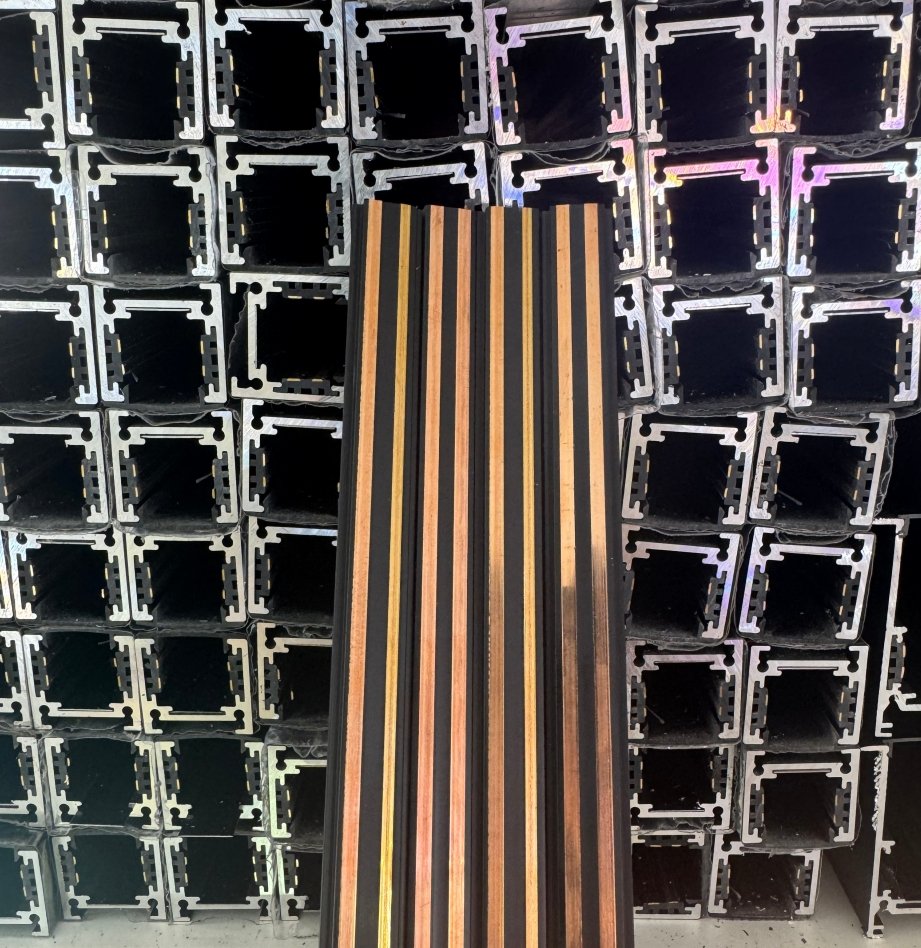
Aluminum Profile: The Structural Base of a Magnetic Track Rail
The body of a magnetic track rail is typically made from an aluminum profile, and this part has a direct influence on structural strength, dimensional accuracy, and final appearance.
Alloy Grade and Raw Material Cost
In many magnetic track lighting applications, 6063-T5 aluminum is widely preferred because it offers a good balance of:
- extrusion performance
- dimensional stability
- surface finish quality
- structural reliability
Like other metal materials, aluminum cost also changes with the global market. That means fluctuations in ingot prices can affect the final quotation of a magnetic track lighting system.
Extrusion Precision and Die Condition
Not all aluminum profiles are manufactured to the same standard. In a DC48V magnetic track rail, precision matters because the track must fit the lighting modules accurately.
If extrusion tolerances are poor, buyers may encounter:
- loose-fitting modules
- difficult installation
- visible gaps
- alignment issues
- inconsistent straightness over long lengths
Die quality and process control are also important. Worn dies or inconsistent extrusion conditions may reduce profile consistency, even when the rail looks acceptable at first glance.
At wrprofiles.com, we often find that buyers comparing only the visible shape of the profile may miss the much bigger issue: dimensional control.
Conductor Material: One of the Biggest Factors Behind Magnetic Track Rail Cost
Inside the rail, the conductor carries the DC48V power supply, which makes conductor material one of the most important cost variables in any magnetic track lighting system.
Pure Copper vs. Brass
In daily industry communication, conductor materials are often described simply as pure copper and brass. In Chinese, many buyers refer to them as 紫铜 and 黄铜, and this distinction matters a lot.
From a material perspective, pure copper typically contains about 99.9% copper, which is one reason it is valued for electrical applications. Brass, by contrast, is a copper-zinc alloy. Its exact composition can vary by grade, but it generally contains significantly less copper than pure copper and may also include small amounts of other elements in certain formulations.
This difference in composition directly affects conductivity. In general, pure copper has much higher electrical conductivity, while brass has comparatively lower conductivity. For magnetic track lighting systems, this is an important distinction because conductor performance influences voltage stability, resistance, and long-term electrical reliability.
In general:
- Pure copper is preferred because it offers higher conductivity, lower resistance, and more stable long-term performance.
- Brass is typically considered a lower-cost alternative with lower conductivity.
This means that under similar conditions, a conductor made from pure copper usually performs better in terms of:
- power transmission efficiency
- voltage stability
- heat control
- long-term reliability
For this reason, conductor material is often one of the main reasons why one magnetic track rail supplier quotes much higher than another.
Why Material Description Can Be Misleading
In lower-cost products, the actual conductor material is not always described clearly. In some cases, brass may be used in place of pure copper while being presented in a way that suggests a higher-grade material.
This is one of the areas where experienced buyers pay close attention, because two rails may look similar from the outside while using very different conductor materials inside.
Cross-Section Inspection: A Practical Way to Check
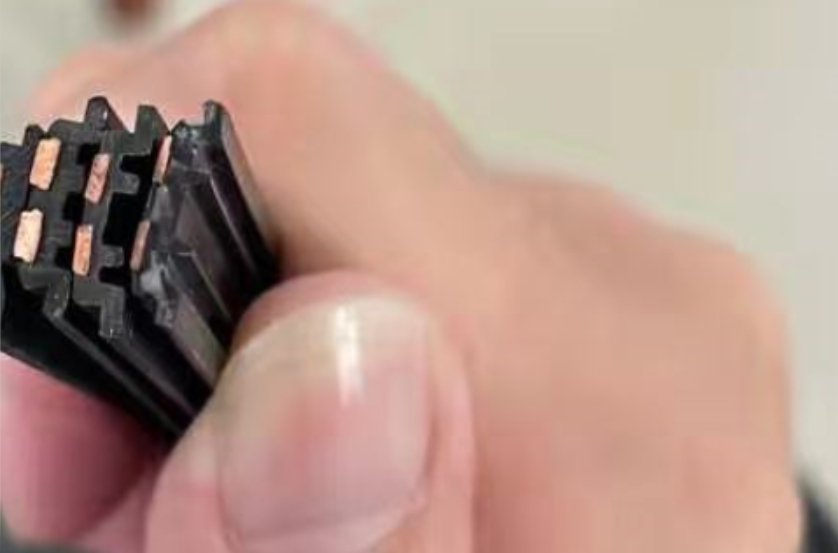
A useful field-level check is to look at the cross-section of the conductor.
- Pure copper usually shows a more reddish metallic tone.
- Brass usually appears more yellow or golden in color.
This is one reason why many experienced buyers and factory technicians prefer to inspect the conductor cross-section rather than rely only on surface appearance.
That said, visual inspection is still only a preliminary method. For important projects, buyers should also confirm:
- conductor material specification
- conductor thickness
- cross-sectional size
- supporting technical data if available
At WR Profiles, we always recommend verifying conductor specifications rather than judging only by external appearance. In sourcing, the inside of the rail often tells the real story.
Thickness Also Matters
Even when the conductor material is identified correctly, thickness and cross-sectional area still have a major effect on performance.
A thinner conductor may reduce production cost, but it can also increase:
- electrical resistance
- voltage drop
- heat generation
- performance instability over longer runs
So when comparing magnetic track rail prices, buyers should not only ask whether the conductor is copper or brass. They should also ask how thick it is.
Internal Magnetic Components and Dust Covers
Beyond aluminum and conductors, a magnetic track rail also depends on internal parts that affect installation quality and durability.
Steel or Iron Components for Magnetic Fixing
Steel or iron inserts inside the rail help create the magnetic holding force needed to keep lighting modules securely in place.
The quality of these components can affect:
- magnetic holding strength
- installation stability
- anti-corrosion performance
- long-term structural consistency
Low-cost products may use thinner or less consistent internal metal components, which can reduce the secure feel of the lighting modules once installed.
Dust Covers and Installation Protection
Dust covers are often overlooked, but they still play an important role in a magnetic track lighting system.
A good dust cover can help:
- protect the inside of the rail during transport
- reduce dust accumulation before final installation
- keep the track visually clean on site
- support the minimalist appearance expected in architectural lighting projects
Depending on the product design, dust covers may be made from PVC or PC, and material quality can also affect durability and appearance.
Surface Finish: More Than Just Appearance
For architectural and interior lighting, the finish of the rail is part of the product value. A magnetic track rail is not judged only by electrical function, but also by how well it integrates into the final space.
Powder Coating, Electrophoresis, and Finish Quality
Surface treatment may include:
- powder coating
- electrophoresis
- other finishing methods depending on project requirements
The key point is not simply the name of the process, but the actual finish performance, including:
- coating adhesion
- scratch resistance
- color consistency
- uniform texture
- long-term durability
If the coating process is poorly controlled, the surface may chip, flake, or wear prematurely when lighting modules are inserted, adjusted, or maintained.
For buyers comparing magnetic track lighting system cost, finish quality is often one of the less visible but very meaningful differences.
Assembly Quality, Packaging, and Export Protection
A magnetic track rail is not just an aluminum extrusion. Final quality depends heavily on how the product is assembled, protected, and delivered.
Manual Assembly and Conductor Positioning
In many cases, inserting conductors and internal magnetic components still requires careful assembly work.
If this part is rushed, problems may include:
- conductor misalignment
- uneven electrical contact
- poor module insertion
- inconsistent fit across different rails
This is especially important in long projects where consistency between multiple rails matters.
Packaging for 2m and 3m Track Rails
For export business, packaging is a serious cost factor. Long rails such as 2-meter and 3-meter magnetic track rails are vulnerable during sea freight and inland transportation.
Without proper packaging, products may arrive with:
- bending
- edge damage
- corner impact marks
- coating scratches
- deformation during handling
Strong export packaging may include:
- reinforced cartons
- internal protective inserts
- thick tubes
- edge protection
- wooden support frames when necessary
At wrprofiles.com, we consider packaging part of product reliability, not just a shipping detail. A rail that arrives damaged is never a low-cost purchase in real terms.
What Buyers Should Ask When Comparing Magnetic Track Rail Quotes
When one quotation is much lower than the others, buyers should look beyond the unit price and ask technical questions.
Key Questions for Suppliers
- What aluminum alloy and temper are used for the track profile?
- Is the conductor made from pure copper or brass?
- What is the conductor thickness or cross-sectional specification?
- What surface treatment is used, and how durable is it?
- What packaging standard is used for export shipment?
- How is assembly accuracy and quality control managed?
These questions help buyers compare quotations based on real product value rather than appearance alone.
Final Takeaway: Similar Appearance Does Not Mean Equal Quality
Two magnetic track rails may look nearly identical in photos, but their actual cost can differ significantly because of what is happening inside the product. Aluminum grade, conductor material, conductor thickness, magnetic components, surface finish, assembly accuracy, and packaging all affect the final quotation.
For importers, distributors, and project buyers, choosing the lowest price without checking these details may create higher costs later through installation issues, electrical inefficiency, product inconsistency, or freight damage.
At WR Profiles, we believe that a reliable magnetic track lighting system should be evaluated by its full specification, not just by its visible shape or initial quotation. That is why wrprofiles.com focuses on clear communication, transparent material discussion, and practical product understanding for professional buyers.
A magnetic track rail is not defined only by how it looks, but by the materials, tolerances, and quality standards built into it.