
Say Goodbye to Visible LED Dots: A Practical Guide to Better Linear Light Diffusion for Wholesalers
For LED lighting wholesalers, product quality is judged long before a specification sheet is read. In linear lighting projects, one of the fastest ways to undermine a premium look is visible LED dotting inside the fixture. When individual light sources can be seen through the diffuser, the result often feels harsh, inconsistent, and lower in value than the project intended.
The good news is that dot-free linear lighting is not guesswork. It comes from understanding how LED strip density, diffuser material, and profile geometry work together as one optical system. This guide explains the key factors behind smooth linear diffusion and how wholesalers can make more reliable recommendations to distributors, contractors, and project buyers.
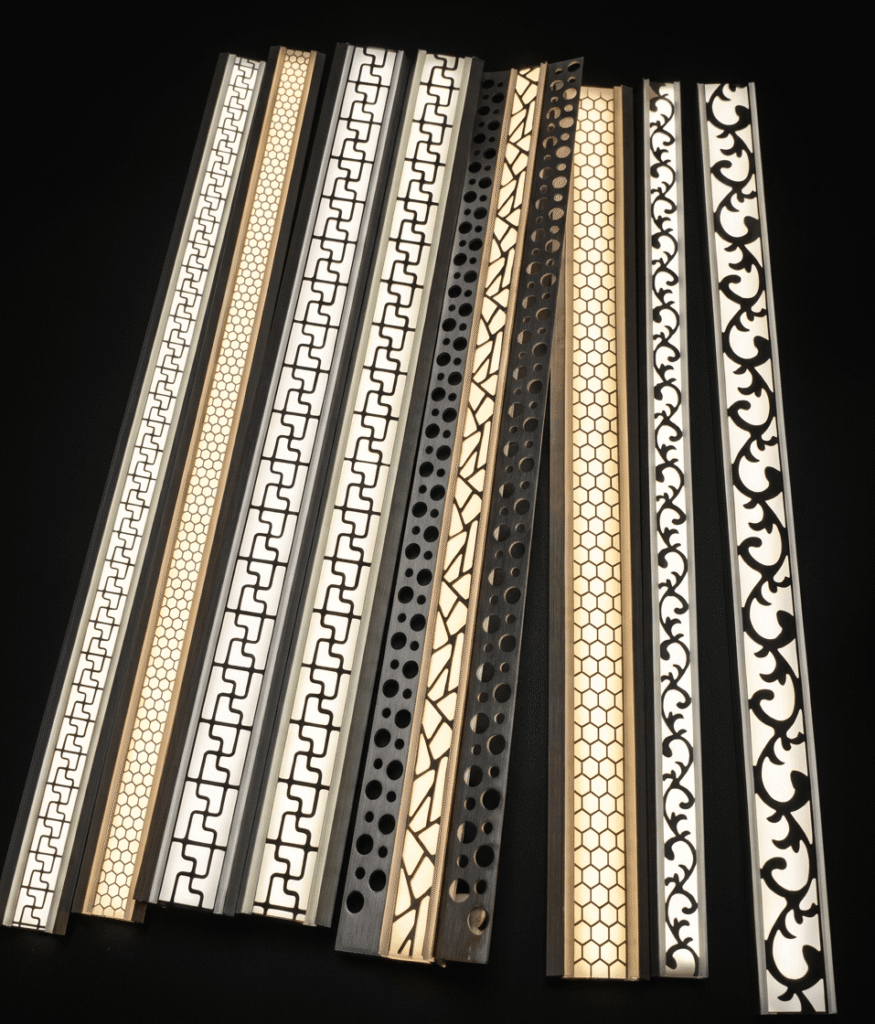
🔍 What Causes Visible LED Dots in Linear Fixtures?
Visible LED dots—sometimes called hotspots or pixelation—appear when the light from individual LEDs does not blend sufficiently before it reaches the diffuser.
The core issue is optical distance
In most cases, the deciding factor is not simply the total profile height, but the effective distance between the LED surface and the diffuser. If this optical cavity is too shallow, each LED remains visually distinct instead of merging into a continuous line of light.
LED spacing matters just as much
The second major factor is LED pitch, or the distance between adjacent LEDs on the strip. Wider spacing makes hotspots more likely, especially in shallow channels or when clear or low-haze covers are used.
Diffuser properties also affect the result
Even with a suitable profile depth, dot visibility can still depend on:
- diffuser haze level
- material thickness
- strip brightness
- LED beam characteristics
- viewing distance
- installation environment
As a practical rule, tighter LED spacing and greater LED-to-diffuser distance generally improve uniformity. For demanding architectural applications, the best results come from evaluating the strip, profile, and cover as a complete system rather than selecting each component separately.
🧪 How to Improve Diffusion Performance
A smooth “line of light” usually comes from balancing several variables rather than relying on a single product feature.
1. Increase LED density
Higher-density LED strips reduce the visible gap between light sources and make blending easier.
Typical recommendations for many linear applications include:
- 120 LEDs/m for general commercial use
- 180 LEDs/m for better uniformity in shallower profiles
- COB LED strips for applications where minimal dot visibility is critical
Compared with conventional SMD strips, COB strips provide a much more continuous light-emitting surface, making them one of the most effective options for shallow-profile installations.
2. Use a diffuser designed for hotspot suppression
An opal or milky diffuser can significantly reduce visible LED dotting, but not all covers perform the same way. Light transmission alone does not determine performance. The final result also depends on haze level, wall thickness, and the strip-profile combination used.
In practice, a well-designed diffuser should balance:
- good light uniformity
- acceptable light transmission
- consistent color appearance
- long-term material stability
3. Increase the optical cavity where possible
If the application allows, deeper channels usually provide more forgiving optical performance. In many standard projects, an effective LED-to-diffuser distance of around 12–15 mm makes smooth diffusion easier to achieve than in ultra-shallow designs.
By contrast, when the optical depth falls below roughly 8–10 mm, hotspot visibility becomes much more likely with conventional SMD strips unless a high-density layout or COB solution is used.
4. Evaluate the final installation conditions
A profile that appears dot-free in a showroom may look different in the field. Output level, mounting height, surface reflectance, and viewing angle can all influence perceived uniformity.
For this reason, diffusion performance should always be judged at the intended viewing distance and brightness level of the final application.
🧱 Choosing the Right Diffuser Material: PC vs. PMMA
When selecting a diffuser, wholesalers often compare polycarbonate (PC) and PMMA (acrylic). Both materials are widely used in linear lighting, but they offer different strengths.
Material comparison
| Material | Main Advantages | Typical Considerations |
|---|---|---|
| PC | High impact resistance, better durability during transport and installation, widely used for commercial profiles | Optical and UV performance depend strongly on formulation and quality level |
| PMMA | Excellent optical clarity, good long-term appearance, often strong resistance to yellowing | More brittle and less impact-resistant than PC |
This comparison matters because wholesalers are not only choosing a diffuser for appearance, but also for handling, logistics, project life cycle, and after-sales reliability.
When PC is a strong choice
For many wholesale and project-based applications, UV-stabilized PC diffusers offer a practical balance between durability and diffusion. They are especially useful where transportation, site handling, and repeated installation work may create a risk of cracking or breakage.
When PMMA may be preferred
Where optical clarity is the top priority and mechanical impact is less of a concern, PMMA can also be a strong option. The right choice depends on the application, not just the material label.
The key takeaway is simple: material choice should be matched to real project conditions, not treated as a one-size-fits-all decision.
💡 A More Reliable Formula for Dot-Free Linear Lighting
For wholesalers advising customers, the most dependable recommendations usually come from system matching rather than individual product claims.
A practical combination for many projects
For a premium linear lighting result, the following combination is often effective:
- High-density LED strip or COB strip
- Opal / high-diffusion cover
- Adequate LED-to-diffuser distance
- Profile and strip tested together before bulk order
This approach is far more reliable than selecting a profile first and assuming any strip will perform well inside it.
Why system validation matters
Even high-quality components can produce disappointing results if they are poorly matched. A deeper profile cannot fully compensate for a weak diffuser, and a premium diffuser cannot always hide a low-density strip in a very shallow channel.
For important architectural or retail projects, wholesalers should ideally validate:
- strip type
- LED density
- profile geometry
- diffuser finish
- target brightness
- viewing conditions
That is how a supplier moves from simply selling aluminum profiles to providing application-ready linear lighting solutions.
🏭 What Wholesalers Should Expect from a Profile Supplier
A strong supplier should offer more than extrusion capacity. In real projects, consistency and application support often matter just as much as raw material quality.
Key things to look for
- Consistent extrusion accuracy to ensure stable diffuser fit and clean assembly
- Reliable diffuser tolerance control to reduce gaps, light leakage, or installation issues
- Material transparency including alloy grade, diffuser specification, and aging performance
- Application guidance on strip compatibility and expected diffusion results
- Pre-cut or custom processing support to reduce handling time downstream
When a supplier can support the optical match between strip and profile—not just supply the channel itself—they become much more valuable to distributors and contractors.
🚀 Why This Matters for Wholesalers
For wholesalers, preventing visible LED dots is not only about product appearance. It also affects:
- customer confidence
- project acceptance
- returns and complaints
- brand positioning
- long-term repeat business
A smooth, continuous line of light signals quality. A dotted line of light raises questions about product selection, system compatibility, and supplier expertise.
That is why the most successful wholesalers do not sell profiles as isolated parts. They sell a matched solution: profile, diffuser, strip recommendation, and practical guidance based on the end application.
Conclusion
Achieving a clean, dot-free linear lighting effect depends on one principle above all: diffusion is a system result. LED density, diffuser design, and optical depth must work together to create a smooth visual outcome.
For wholesalers, this creates a clear opportunity. When you help customers understand how to match the right strip with the right profile and cover, you are no longer competing on price alone. You are offering technical judgment, reducing project risk, and positioning your business as a trusted lighting partner.
At wrprofiles.com, we focus on that system-based approach by combining precision aluminum profiles, carefully matched diffuser options, and practical support for strip compatibility in wholesale applications.